1. Introduction to DELF A2
- What is DELF A2?
- Key Takeaways
- Purpose of the DELF A2 Exam
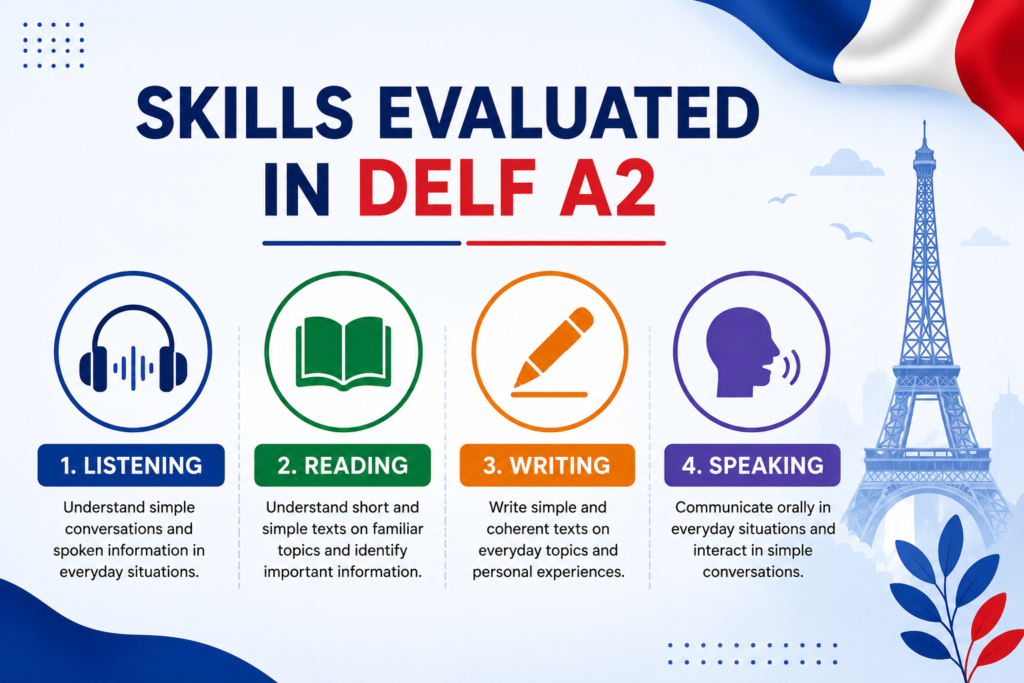
- Skills Evaluated
DELF A2 Exam Structure
| Section | Description | Duration | Marks |
|---|---|---|---|
| Listening | Short recordings about everyday life (played twice) | Approximately 25 minutes | 25 |
| Reading | Written documents related to daily life | 30 minutes | 25 |
| Writing | Two short written tasks | 45 minutes | 25 |
| Speaking | Guided conversation, monologue, and interaction | 6–8 minutes + 10 min prep | 25 |
Additional Information
- Total duration: 1 hour 40 minutes
- Total marks: 100
- Passing marks: 50/100
- Minimum required per section: 5/25
DELF A2 Syllabus
1. Communication Skills – DELF A2
A. Social Interaction
- Approaching Someone and Asking for Something
- Getting Acquainted with Someone
- Introducing Oneself and Others
- Asking for Clarification and Giving Personal Information
- Making and Managing Appointments
- Congratulating, Wishing, and Giving Compliments
- Inviting, Offering, Accepting, and Declining
- Discussing Daily Habits and Plans
- Asking and Giving News About Someone
- Expressing Likes, Dislikes, and Plans
- Offering and Asking for Help
- Interacting on the Phone
- Sharing Ideas for Outings
- Making Suggestions and Responding to Suggestions
- Stating Reasons and Explaining Choices
- Expressing Reservations and Opposing Views
- Talking About Pleasure and Displeasure of Past Events
- Expressing Interest or Indifference
- Organizing an Outing and Discussing Plans
- Asking for and Seeking Advice
- Expressing Intentions and Offering Help
- Giving Caution and Warnings
- Talking About Professional Experience and Feelings
- Communicating Hopes and Wishes
- Talking About Intentions
B. Description and Stories
- Speaking About Past Events
- Sharing Memories, Anecdotes, and Stories
- Reporting Factual Stories
- Narrating Past Experiences
- Learning About Places and Describing Them
- Introducing Countries, Cities, and Residents
- Describing Physical Conditions
- Describing People and Relationships
- Introducing People with Short Biographies
- Learning About Objects and Describing Them
- Comparing Objects, People, and Platforms
- Presenting Topics or Projects
C. Share Information
- Seeking and Providing Instructions
- Asking for and Providing Information
- Explaining How to Use Devices
- Asking and Giving Explanations and Details
D. Opinions and Arguments
- Expressing Agreement or Disagreement
- Communicating Opinions
- Judging and Appreciating
- Explaining Cause and Consequence
E. Goods and Services
- Explaining Quantities and Measurements
- Making Purchases and Transactions
- Talking About Modes of Transportation
- Making Reservations and Orders
- Verifying Information About Time
- Expressing Satisfaction, Dissatisfaction, and Complaints
2. Discursive Skills – DELF A2
A. Various Kinds of Interactions
- Informal Conversation
- Formal Conversation
B. Exclaiming
- Expressing Surprise
- Reacting Emotionally
C. Politely Interrupting to Ask for Repetition
- Asking Someone to Repeat
- Clarifying Meaning
D. Engaging in or Ending Conversations
- Starting a Conversation
- Ending a Conversation Politely
E. Expressing the Desire to Share Views
- Giving Personal Opinions
- Participating in Discussions
F. Ensuring Listener’s Understanding
- Checking Comprehension
- Confirming Clarity
3. Sociocultural Knowledge
A. Politeness in Social Settings
- Greetings and Courtesy Expressions
- Social Etiquette
B. Formats for Invitations, Thanks, and Apologies
- Invitations
- Thank-you Messages
- Apology Messages
C. Basics of Friendly Letter/Email Writing
- Informal Emails
- Friendly Letters
D. Basics of Phone Conversation Formalities
- Telephone Expressions
- Formal and Informal Calls
E. Formalities in Paying Bills
- Restaurant and Service Interactions
F. Basics of Formal/Business Letter Writing
- Formal Greetings
- Professional Closing Expressions
4. Grammar at the DELF A2 Level
Core Grammar Topics
- Tenses
- Questions
- Exclamations
- Negation
- Infinitive and Imperative
- Conditionals
- Subjunctive
- Participles
- Other Verb Groups
- Hypotheses and Assumptions
- Nomination
- Gender and Number
- Items
- Adjectives
- Adverbs
- Space and Time
- Pronouns
- Logical Relationships
- Connectors
5. Vocabulary Themes at the DELF A2 Level
Everyday Vocabulary Themes
- Personal and Everyday Objects
- Customs, Traditions, and Cultures
- Professional Sphere
- Family and Social Life
- People: Physical Characteristics and Personality
- Feelings and Emotions
- Health
- Daily Activities
- Leisure and Sports
- Modes of Transport
- Vacation and Travel
- Housing: Furniture and Facilities
- Cuisines and Various Foods
- Clothes and Accessories
- Media and News
- Weather
- Environment, Climate, and Ecology
- Education Systems and Training
Frequently Asked Questions (FAQ)
Can I write DELF A2 without A1?
Yes, DELF A2 can be attempted without completing A1, although basic French knowledge is recommended.
What DELF level is considered fluent?
Fluency is generally associated with B2 level and above.
How should I study for DELF A2?
Focus on listening, speaking, reading, and writing practice using textbooks, mock tests, audio resources, and conversation practice.
Suggested Study Areas for DELF A2 Preparation
Listening
- Everyday conversations
- Announcements
- Short dialogues
Reading
- Emails
- Notices
- Advertisements
- Articles
Writing
- Informal emails
- Invitations
- Short descriptions
- Messages
Speaking
- Self-introduction
- Daily routines
- Opinions and preferences
- Role-play conversations
Recommended Grammar for Preparation
- Present Tense
- Passé Composé
- Imparfait
- Futur Proche
- Reflexive Verbs
- Direct and Indirect Object Pronouns
- Comparative and Superlative
- Negation Structures
- Question Formation
- Prepositions
- Connectors and Linking Words
Recommended Vocabulary Categories
- Family
- School and Work
- Shopping
- Travel
- Food and Restaurants
- Health and Body
- Technology and Media
- Emotions and Feelings
- Environment
- Festivals and Traditions
DELF A2 Success Tips
- Practice daily speaking
- Listen to French audio regularly
- Read simple French texts
- Write short paragraphs daily
- Practice mock exams
- Improve pronunciation and fluency
- Learn common connectors and expressions