How to Talk About Childhood Memories in French
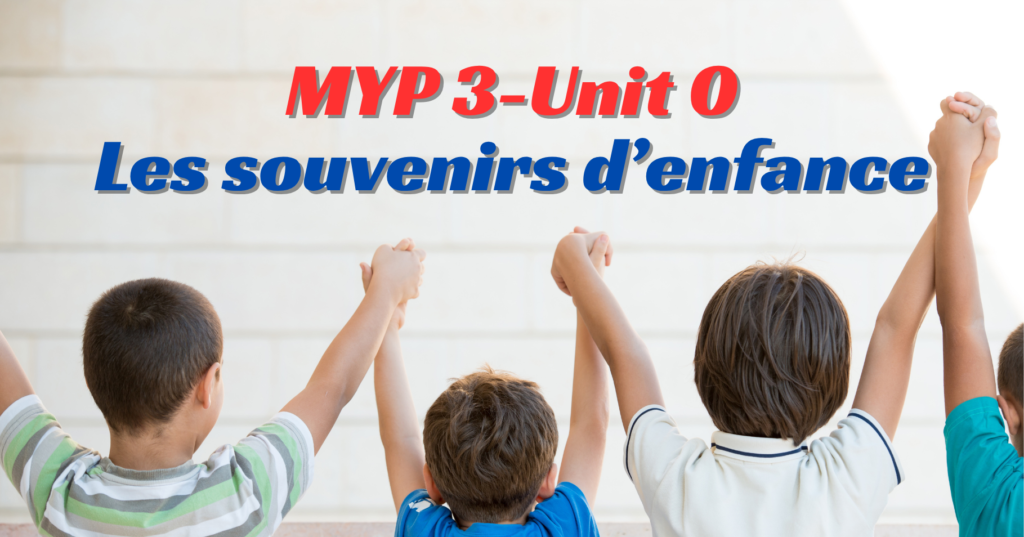
Aligned with the International Baccalaureate MYP 3 (Phases 3–4)
childhood memories French lesson, imparfait vs passé composé explanation, IB MYP French unit 0, describe past in French, French narrative writing beginner
Theme: Childhood & Memories
Guiding Question
What childhood memory best represents who I am today?
Global Context: Personal and Cultural Expression
This unit helps you explore how language allows us to express identity, memories, and emotions.
Through childhood memories, learners develop:
- personal reflection
- cultural awareness
- emotional expression in French
Statement of Inquiry
Memories of childhood help us understand our identity and express emotions through language.
Communication Objectives
By the end of this unit, you will develop three essential communication skills:
1. Describe Childhood Habits and Routines
You learn to talk about repeated actions in the past using the imparfait.
Why this matters
In French, describing habits helps build:
- clear narratives
- detailed descriptions
- natural communication
Example
Quand j’étais petit, je jouais dehors tous les jours.
This structure shows:
- time reference (quand j’étais petit)
- repeated action (je jouais)
2. Narrate Past Experiences
You learn to tell stories and events using a combination of:
- imparfait → background
- passé composé → main actions
Why this matters
This is a core IB writing and speaking skill (Criteria B & C).
Example
Quand j’étais enfant, je jouais dans le jardin.
Un jour, je suis tombé.
This creates a structured narrative:
- background → imparfait
- event → passé composé
3. Express Feelings and Emotions
You learn to describe how they felt in the past.
Why this matters
It helps you:
- develop deeper communication
- express identity (Key Concept: Identity)
- add detail to narratives
Example
J’étais heureux, mais parfois j’étais timide.
Language Focus
Grammar
Imparfait vs Passé Composé
This is the central grammar focus of Unit 0.
| Imparfait | Passé Composé |
|---|---|
| Habit | Event |
| Description | Action |
| Background | Main action |
Key Idea
- Imparfait = description and repetition
- Passé composé = completed action
Time Markers
Time markers help structure narration and improve fluency.
- quand → when
- autrefois → in the past
- pendant que → while
Example
Pendant que je jouais, il a commencé à pleuvoir.
Vocabulary
Childhood Activities
- jouer
- regarder
- aller à l’école
- passer du temps avec des amis
Emotions and Personality
- heureux / triste
- timide / sociable
- content / excité
Text Types
You will practice three important IB text types:
1. Personal Narrative
Telling a story about past experiences
Example:
Quand j’étais petit, je vivais dans un village…
2. Interview
Asking and answering questions about childhood
Example:
Tu faisais quoi après l’école ?
3. Short Autobiography
Describing your life and identity
Example:
Je suis né en…, quand j’étais petit…
Key & Related Concepts
Key Concept: Identity
You explore how childhood experiences shape who they are today.
Related Concepts
- Perspective → different ways of remembering the past
- Expression → using language to share memories
Inquiry Questions
Factual
What activities did children do in the past?
→ Focus on vocabulary and basic understanding
Conceptual
How do memories shape who we are today?
→ Encourages deeper thinking and reflection
Debatable
Are childhood memories always reliable?
→ Develops critical thinking and argumentation
ATL Skills Development
Communication
Students learn to narrate events clearly using correct tenses.
Thinking
Students compare:
- past vs present
- habits vs events
Self-Management
Students learn to:
- organize ideas logically
- structure a narrative
Why This Unit Is Important
This unit builds the foundation for:
- French storytelling
- IB writing tasks
- Oral communication
- Grammar accuracy
Without mastering this unit, students struggle with:
- past tense usage
- narrative structure
- expressing ideas clearly
Next Lesson
Lesson 1 — Entrée dans l’unité (Childhood Vocabulary & Speaking Practice)
Suggested anchor text:
- Learn childhood vocabulary in French
- Start speaking about your childhood in French